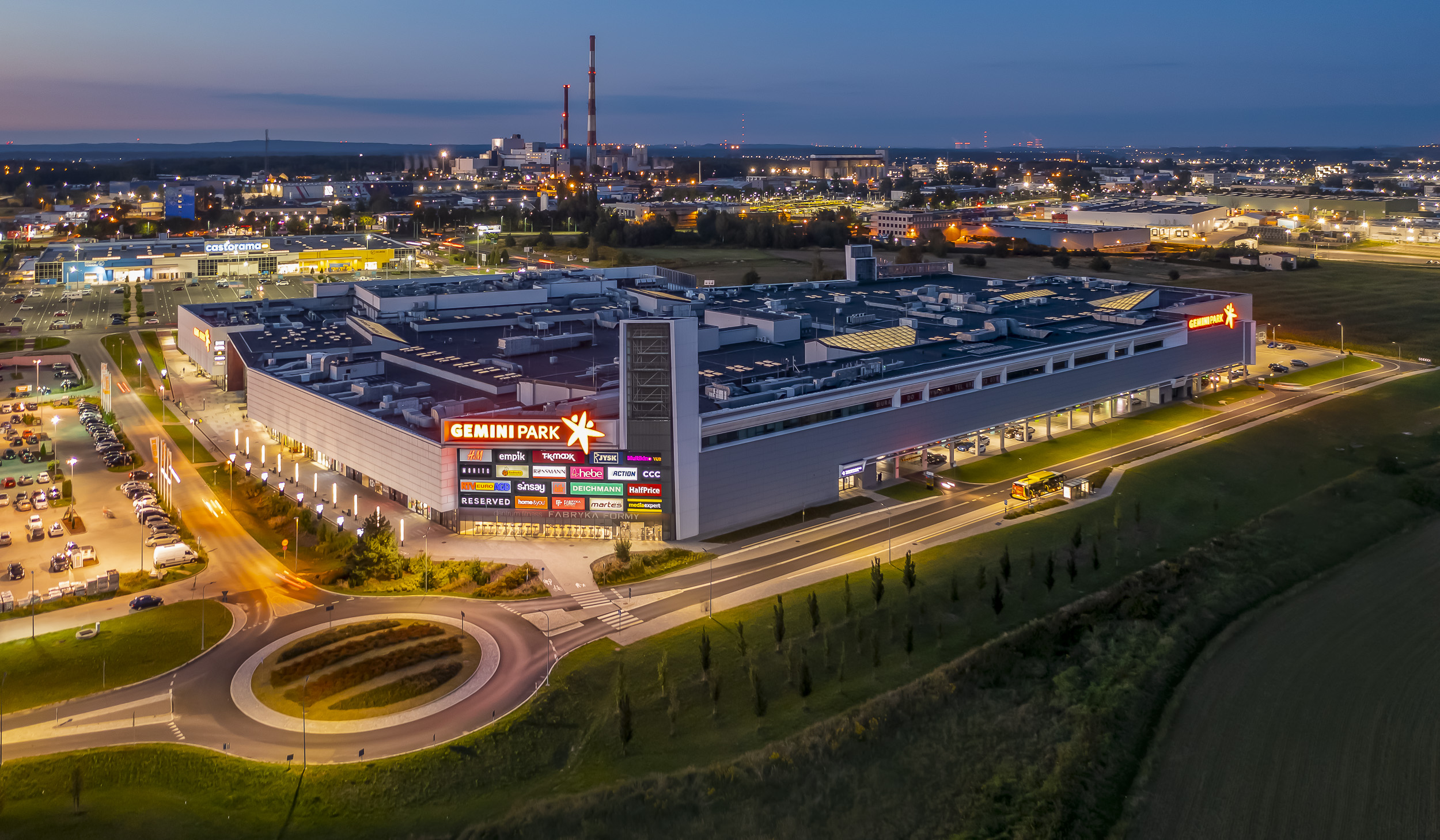
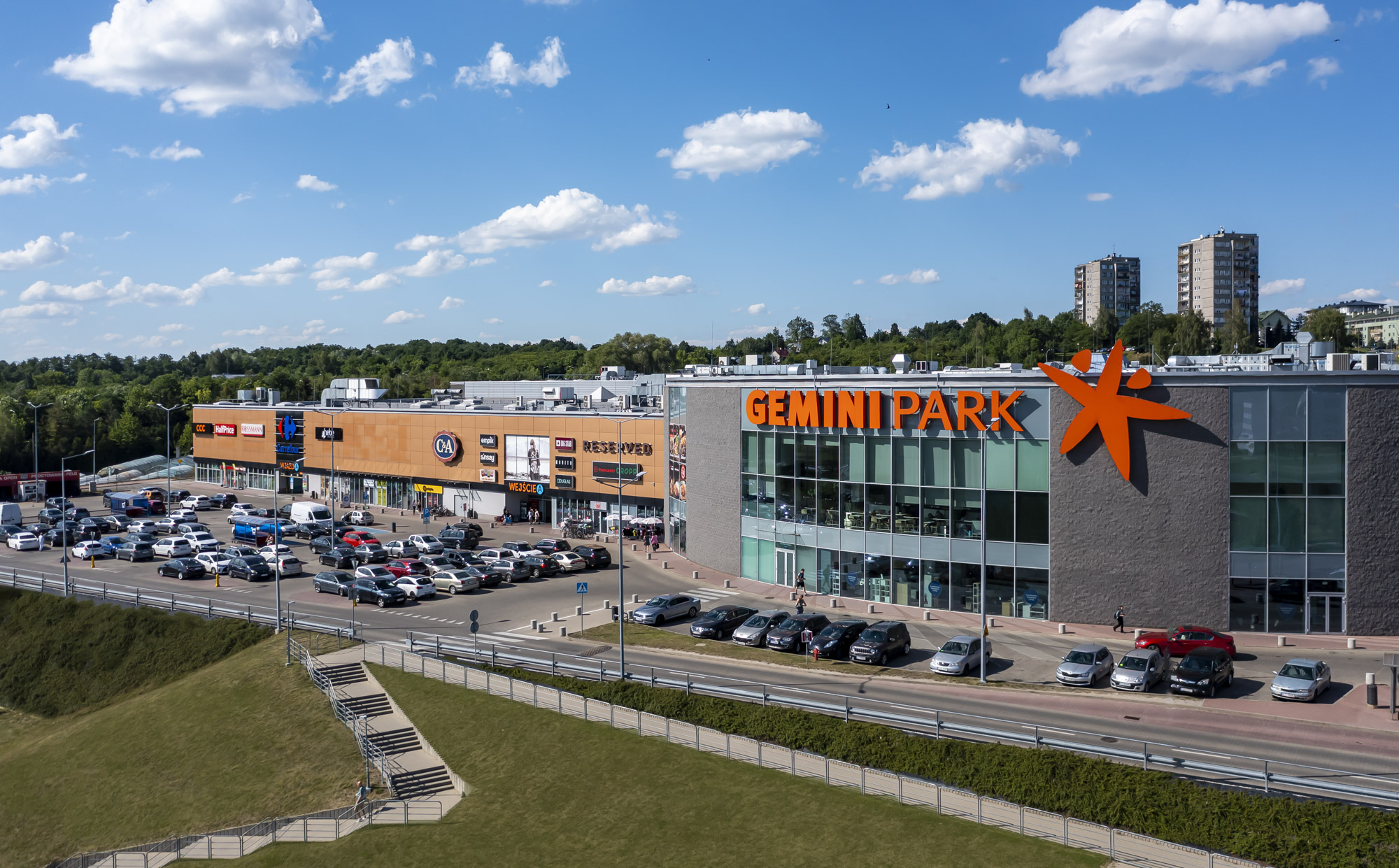
Poland’s first compact IKEA store has opened at Gemini Park Bielsko-Biała. The new format launched in October 2025. The project has broken records in terms of construction speed, visitor numbers and its impact on the local market.
The flexible approach of all parties involved in the project resulted in the time taken to fit out the 2,000 sq m space being reduced from 8 to 4 months, whilst the centre remained fully operational for customers.
IKEA’s first month of operation saw a rise of over 26 per cent in footfall at the centre, whilst tenants’ average turnover increased by over 20 per cent. IKEA also views the project’s implementation and the results achieved in the store’s first quarter of operation positively.
The opening of the compact IKEA store at Gemini Park Bielsko-Biała is one of the most interesting leasing developments in the retail sector in recent months. What significance does this project hold for the shopping centre and for the local market?
Krzysztof Brączek: This is one of the most significant moments in the history of Gemini Park Bielsko-Biała. We opened the centre in 2009, expanded it in 2014, and IKEA joined us in 2025. This project has become one of the milestones in the centre’s development and confirmation of its mature and strong position in the local market. The global brand chose Gemini Park Bielsko-Biała for its debut in a completely new format – the first and so far the only one of its kind in Poland.
From a personal perspective, this is an event of particular significance to me. I was born and bred in Bielsko-Biała and have been watching the city and the local retail market develop for years. The arrival of IKEA in Bielsko-Biała has been long awaited by the residents. Until now, accessing the brand’s range required travelling to Katowice or Kraków, which involved varying degrees of inconvenience. Today, we can enjoy IKEA’s range in a modern, convenient setting, without the need for long journeys.
At the same time, this is the world’s first compact IKEA store located within a shopping centre. This confirms that Gemini Park Bielsko-Biała is a flexible and reliable partner for global brands, highly recognised in the local market, and ready for innovation and the implementation of pilot projects of strategic importance.
Bielsko-Biała has become the first location in Poland for this IKEA format. How many shopping centres were vying for an IKEA store, and what was the deciding factor in Gemini Park being chosen for the pilot?
You would need to ask IKEA representatives for the details. At the very start of the process, the brand certainly had to decide which city in Poland to choose. I think the key factors here included population size, high consumer purchasing power, low unemployment, an attractive demographic structure, and a suitable distance from a traditional IKEA store. Bielsko-Biała met these criteria. It was only at the next stage that specific retail premises in our city were analysed, and it is hardly surprising that all the major centres were vying for such a tenant.
We presented analyses of footfall, turnover, strategy and growth potential, as well as customer engagement and tailoring the offering to their needs – an aspect to which we pay particular attention. This served as the starting point for further discussions. Ultimately, as subsequent events confirmed, our centre very much met IKEA’s expectations. Many brands had already chosen Gemini Park Bielsko-Biała for their local, regional, and even national debuts; in 2025 alone, these included Sports Direct, Mr. DIY, Romet and Giga Buła, which confirms the attractiveness of our centre as a business partner. I therefore believe that a combination of many factors was decisive, but I have no hesitation in emphasising that, alongside these ‘hard’ data, the relationships and trust built up over the years proved to be key.
A key strength was our long-standing partnership with IKEA. Since 2021, we have hosted the brand’s Planning Studio, which has achieved some of the best results in Poland. Together, we carried out several creative, widely discussed marketing campaigns, including a competition with a prize of 10,000 PLN for shopping at IKEA, involving guessing the number of the brand’s products in a specially arranged interior, and the first “Great IKEA Furniture Assembly Tournament”, organised to mark the centre’s 15th anniversary, with a top prize of 15,000 PLN. These campaigns were not only impressive but, above all, effective, as confirmed by sales figures, and have had – and continue to have – a long-term impact on building customer loyalty.
These shared experiences gave the brand the confidence that we could “tailor” communication activities to an unconventional format and local context. IKEA was well aware of our openness to non-standard solutions, which is why discussions regarding the pilot format were simply easier.
At this stage, in my view, our flexibility was also crucial. At the time of negotiating the lease terms, IKEA had not yet finalised the concept for the new format one hundred per cent. Significant changes therefore arose during the discussions, and we responded to them quickly and effectively.
What sort of changes?
For example, at the start of our discussions, a slightly smaller shop format was envisaged, around 1,600 sq m. Later, as we worked on the concept, our partner decided that the optimal lettable area would be around 2,000 sq m. To ensure the talks didn’t end in failure, we had to find a solution quickly.
And finding an extra 400 square metres in a shopping centre that is practically fully let is a huge challenge…
All the more so because, at the time of negotiating the contract with IKEA, we didn’t even have that smaller space available. However, we had a clear vision and the conviction that, with a well-chosen strategy and its consistent implementation, we would be able to make it happen. Looking back, I can see that at the time we weren’t fully aware of the scale and complexity of the process, but from the outset I believed in our team, their expertise, and the relationships we had built over the years with both tenants and trusted business partners.
A key decision was to initiate discussions at the right time with a view to reducing the rental space occupied by the bi1 hypermarket. We were well aware of the trend towards compact grocery formats in shopping centres, so we saw this as a strategic opportunity. In this way, we secured the space that we could offer to the Scandinavian brand. The negotiation process required close coordination, as talks with bi1 and IKEA were taking place in parallel, but thanks to the openness and collaborative approach of all three parties, the process went very smoothly.
Were you negotiating two lease agreements at the same time?
Yes, and the outcome of our discussions with bi1 directly influenced what we were able to offer IKEA. And I don’t just mean the size of the leased space, but also its location, layout, direct access to the ramp or delivery yard, and at a certain stage of the talks, deadlines also became a key factor. If we hadn’t managed to finalise the reduction in the hypermarket’s floor space in time, the agreement with IKEA would not have been signed.
Ultimately, in my opinion, all three parties benefited from this project. bi1 reduced the space at a time when the hypermarket market is moving towards compact formats anyway. IKEA secured premises meeting all its criteria. We gained a tenant of strategic importance and a food retail format suited to the changing market.
How long did the negotiations take?
A year. This was followed by eight months of construction and fit-out. Ultimately, we completed the entire process in four months. IKEA wanted to open as soon as possible, and we were determined to make it happen. I think I can say that this was one of the most demanding projects of my professional career.
How is it possible to cut such a complex process in half?
The approach to work organisation and coordination proved to be key. Instead of proceeding in stages, we opted for the simultaneous involvement of all parties. At a certain stage, Gemini Park, bi1 and IKEA were working in parallel, rather than sequentially. At times, several different teams were working side by side on the construction site, which required perfect coordination as well as mutual trust – all whilst the shopping centre was operating ‘just next door’. It was precisely this partnership-based collaboration between IKEA, bi1, numerous contractors and our teams, under considerable time pressure, that allowed us to cut the entire process by almost half and carry it out efficiently from start to finish.
Was the centre operating normally during that time?
Yes. Customers were shopping, and the shops were open. We carried out noisy work at night and quiet work during the day. The schedule was drawn up without any time buffer. Literally: one team would finish erecting a wall, and five minutes later another team was already scheduled to install something on it.
You mentioned the involvement of many external companies in the project…
We entrusted the coordination of the work to the local firm VATRA Group Sp. z o.o. – a trusted partner with whom we have already carried out projects in Bielsko-Biała, Tarnów and Tychy, and who has never let us down. The construction work on our side was carried out by BIK PRO Sp. z o.o. – a company from Bielsko-Biała with whom we have been working for years, and we knew full well that they are able to respond efficiently to changes and challenges arising during the project. We opted for tried-and-tested local partners because we know each other, trust one another and know that we can work together even under significant time pressure.
Why was collaboration with local partners so important to Gemini Park in this project?
All the teams were on site. This meant they could react immediately to changing conditions. Furthermore, local companies know the market, support coordination with tenants and contractors, and at the same time help build a positive image of the centre within the local community. It was partly thanks to this that the work was completed in record time.
And what was the collaboration like within the Gemini Park team?
It was a project that involved practically our entire organisation, and I want to strongly emphasise that it was a team effort. At every stage of the work, there was a leader responsible for a specific area: Joanna Zemczak – Head of Lease during negotiations, Leszek Szklener – Investment Representative during construction, and Marcin Ochmański – Marketing and PR Director, responsible for preparing marketing activities and the opening itself. The whole team did a tremendous job, and I – as the centre’s director – tried to bring everything together and support the leaders at every stage.
And the marketing? Was that unconventional too?
Definitely. Right from the start, we adopted an approach based on close collaboration between two marketing teams – Gemini Park Bielsko-Biała and IKEA. Some of the ideas and creative formats were developed by the Gemini marketing team, some came from IKEA, whilst the campaign itself was implemented as part of the brand’s communication strategy. However, we worked as a single team – with a clearly defined common goal, consistent objectives and precisely defined outcomes to achieve.
We knew that the residents of Bielsko-Biała were eagerly awaiting the opening of the IKEA store, which is why, several months earlier, whilst construction work was still underway, we launched a teaser campaign under the slogan “Hey Gemini, fancy something from IKEA?”. Its aim was to gradually build anticipation and curiosity around the project.
And instead of a ‘grand opening’, we had a housewarming party…
Yes. IKEA symbolically ‘moved into’ Bielsko-Biała, so we invited the locals to join us in celebrating. We focused on local connection, storytelling and genuine emotions. The theme was moving house, and the whole campaign had several stages. We began crafting the story back in June, during the Children’s Day event, which was themed ‘The Great Renovation’. In an area featuring over 10,000 creative building blocks, the youngest visitors could, among other things, build and knock down walls. This prepared our customers for the significant changes in the city centre.
In the next stage of the campaign, we used an automotive icon manufactured right here in Bielsko-Biała – the Fiat 126p. The distinctive little yellow car with boxes on the roof appeared on the city’s streets and invited residents to a housewarming party at Gemini Park. The car, painted in the brand’s colours, immediately caught the eye and became a clear symbol of IKEA’s ‘move’.
The highlight of the campaign was a two-day housewarming party in the city centre – a joint celebration with customers in a specially designed space resembling a living room, furnished, of course, by IKEA. The event featured performers, music, dancing, a buffet, and competitions with prizes worth a total of nearly PLN 50,000. Another key element of the event was a unique promotional campaign, during which we gave away a total of 500 IKEA gift cards, and every hour one person won PLN 1,000 to spend at the store.
To take part in the draw, all you had to do was shop at any store in Gemini Park Bielsko-Biała. We leveraged a synergy effect here, promoting the arrival of a new tenant whilst simultaneously providing tangible support for the turnover of the others. The entire campaign was firmly rooted in the local community, consistent with the DNA of IKEA and Gemini Park Bielsko-Biała, and above all, close to the hearts of the city’s and region’s residents.
Did the results come quickly?
Very quickly. IKEA opened in October 2025. In the store’s first month of operation, footfall at the centre rose by 26% year-on-year, and we ended 2025 with an almost 8% year-on-year increase in footfall, which was significantly higher than the national average. We thus recorded our best year in terms of footfall in the entire 16-year history of our Centre. These are fantastic figures. I must admit that I did not expect such a result. Importantly, IKEA also views the results achieved in the store’s first quarter of operation positively, confirming that the project is meeting its business objectives and has significant growth potential.
Did this have an impact on other tenants?
Definitely. October brought our tenants an increase in turnover, averaging 20%, and this trend has continued in the following months. Of course, it wasn’t all down to the same factors – numerous cross-marketing and sales-boosting campaigns proved effective. It is also extremely important that, thanks to IKEA, many customers were visiting us for the first time – they were only just getting to know the layout of the centre.
In your opinion, what had the greatest impact on the course of the entire process?
Teamwork, in the broadest sense of the word. I’m referring not only to the commitment of the Gemini Park team, but also to the collaborative partnership with bi1, IKEA and external companies – VATRA Group, BIK PRO, security, technical services and the cleaning team. This was not a one-off collaboration, but the result of years of building relationships, mutual trust and proven working methods. Without this organisational and personnel support, this project would never have had a chance of being completed in such a short time. That is why I can say with complete conviction that the key to opening IKEA at Gemini Park Bielsko-Biała was precisely these relationships – relationships built up over the years.
Has the experience gained from this project changed the way the shopping centre team works?
It was a valuable experience that reinforced our belief that day-to-day, partnership-based cooperation with tenants and contractors is of paramount importance, particularly in difficult, demanding projects. It was thanks to this that we were able to react quickly, make unconventional decisions and carry out subsequent stages of work without any losses for any of the parties involved. This has strengthened my conviction that managing the centre in a spirit of partnership, even during the very difficult moments – of which there is no shortage – always pays off in the long term. That is how I strive to work every day.
And what about the future? Are you planning more spectacular milestones like this?
Of course, we’re delighted with the recent results, but we’re not resting on our laurels. 2025 was the best year in the centre’s 16-year history: we achieved record footfall and turnover, as well as a commercialisation rate of almost 100%. These results give us immense satisfaction and motivate us to keep going. We have no intention of slowing down. We have already signed further agreements and have planned upcoming projects and events. What is particularly important to me personally is that the tenants clearly recognise this – they call, congratulate us and ask about the next stages of development. For us, this is the best possible sign that the centre is developing in the right direction.
The interview was conducted with Aneta Wieczorek from PropertyNews.