Last January, you took up the position of director of Gemini Park Tarnów. What prompted you to accept this offer? What was the deciding factor?
First and foremost, the fact that I was born and bred in Tarnów. Although I have felt connected to this city all my life, I have spent the last 15 years working in Nowy Sącz. The offer to return to Tarnów and take the helm at such an important venue as Gemini Park on the local market was an attractive career path for me.
Over the last 15 years, you have observed Gemini Park from a customer’s perspective. Does this perspective help you in your current role?
Definitely. As a customer – and an industry professional at the same time – I subconsciously paid attention to the details: the finish of the shopping arcade, the forms of advertising, and the concepts used by the tenants to present themselves. It’s a sort of ‘professional bias’ – when I enter a shopping centre, I can’t behave like an ordinary consumer. I peek into nooks and crannies, touch materials, analyse the layout of the shops. I knew Gemini Park inside out; I could see its strengths – the centre is well-maintained, commercialised, has a strong position in the region and a loyal customer base. Taking on the role of director of such a well-run facility was an exceptionally interesting career prospect for me, though of course I was aware of the challenges ahead – the centre’s success is no accident, but the result of the work of an entire team of people. I knew, however, that if I could build rapport with the on-site team, I could genuinely support the facility’s further development.
Since the manager’s main task is to ensure visitor satisfaction, your 15 years’ experience as a customer was excellent preparation. Was the centre’s owner, Gemini Holding, aware that you knew the centre ‘inside out’?
Yes, and I think that played a significant role in the decision to collaborate. The development strategy for Gemini Park centres is firmly rooted in the local context – in tailoring the retail, services and entertainment offering to the character of the region and the realistic expectations of local residents. Knowledge of the city, its unique character, history and local community allows for more effective management of the facility, quicker identification of areas requiring change, and the making of decisions that genuinely impact customer comfort and the centre’s development. As a result, management is not merely an operational matter, but becomes a strategic activity that supports the facility’s long-term position in the market.
Looking back over the last 13 months of your tenure, the word ‘return’ stands out. Many brands, such as Triumph, Greenpoint and Sinsay, have reappeared at Gemini Park. Why did they leave in the first place, and what made them decide to return?
This is largely the result of strategic changes on the part of the brands themselves, as well as natural processes related to the commercialisation and optimisation of the tenant mix within the centre. The Sinsay brand is a good example. The LPP Group decided to relocate and expand the Mohito store, but the location they wanted was occupied by Sinsay. It was therefore decided to move Mohito and to prepare a larger space for the second store – which had previously operated in a smaller format – a move that was also driven by the brand’s strong growth in the market.
We then entered into an unwritten agreement: as soon as a suitable space became available, the brand would return in a new guise. The Sinsay store closed at the start of 2025, and by November of the same year we were celebrating its reopening in a format more than twice as large (930 m²). It is currently the brand’s largest store in Tarnów.
I’m not surprised you quickly found space for such a key player. The LPP Group has a full range of brands with you: Reserved, Cropp, House, Mohito and Sinsay. That’s good, but with 44,000 m² of GLA, how do you build a unique tenant mix so as not to become a copy of other centres?
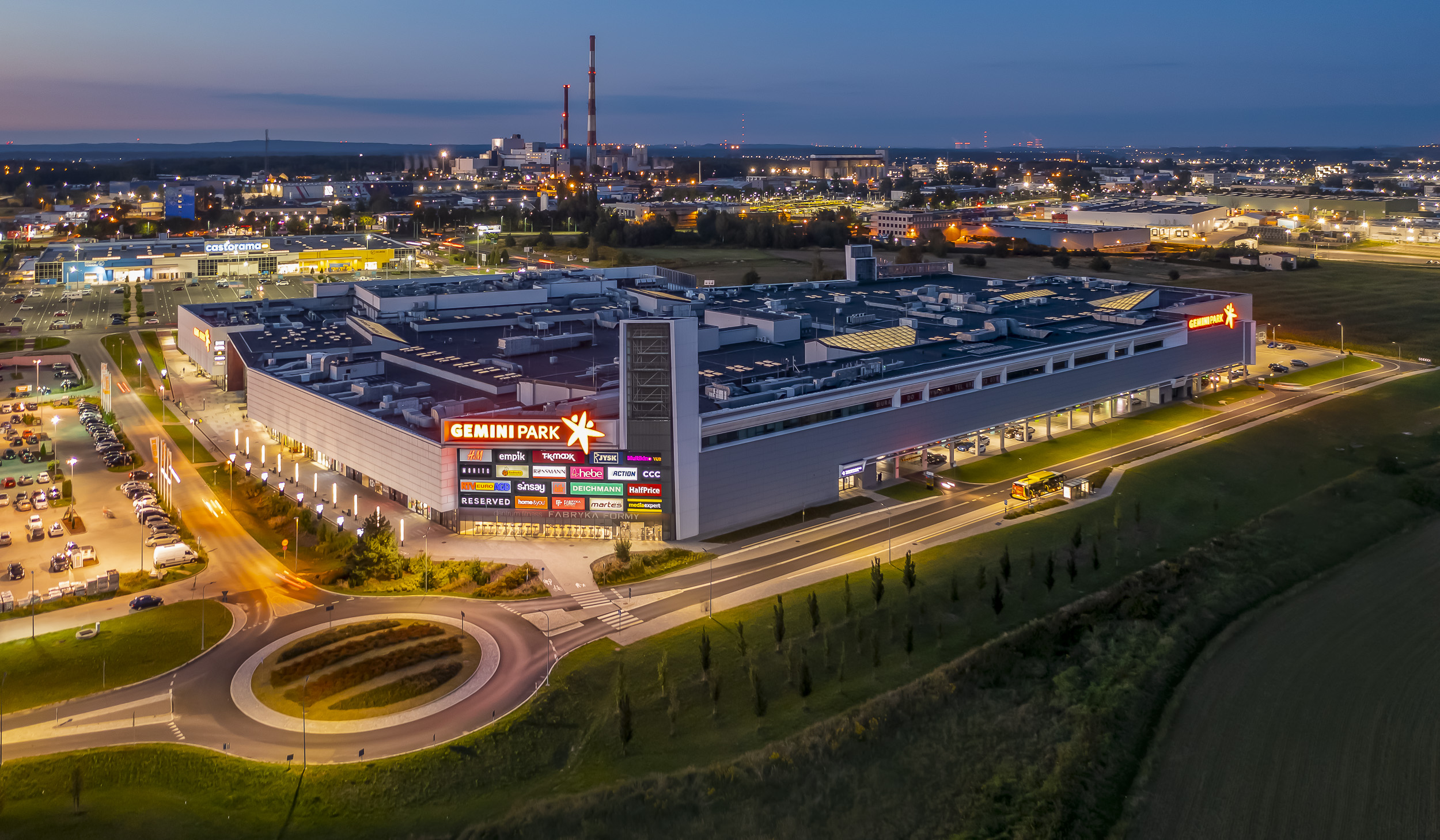
Our offering in the Tarnów market is unique. Whilst Sinsay is sometimes available at other outlets, the other brands in the LPP group are exclusively available here. This is a huge advantage that translates into financial results. In mid-2024, LPP tenants relocated and implemented the latest visual concepts for their stores, of which we are very proud, as these changes allow us to offer our customers a completely new shopping experience. The result? All stores recorded significant increases in turnover compared to the period before the refurbishment.
We are grateful to the LPP Group for their trust and for choosing Gemini Park Tarnów as a key regional location for their brands. For our part, we are doing our utmost to ensure that the partnership is equally rewarding for our partner and provides scope for further growth.
We know that strong, recognisable brands act like a magnet – they attract customers who, whilst they’re there, also take advantage of what other tenants have to offer, boosting sales across the entire centre. It is also crucial that we treat leasing not as a one-off transaction, but as an ongoing process of adapting our offering to the changing needs of the market. Thanks to this, despite 15 years of operation, Gemini Park Tarnów remains ‘young in terms of brands’.
… It might be worth adding an extra question so that a single answer isn’t too long; we want to highlight our leasing results and the renewal of the lease with a key tenant – Castorama.
Last year, we signed a total of 28 lease agreements and addenda covering almost 16,500 m², including 12 new contracts and 16 renewals. The portfolio was joined by recognised, often long-awaited brands, including Rituals, JD Sports, Venezia, Triumph, Dla Spania and Popeyes. At the same time, brands already present in the centre developed dynamically, carrying out refurbishments, relocations and expansions, and offering customers the latest retail formats and standards – including Apart, Mohito, Rossmann, Bytom, 4F and Media Markt.
We must also mention an event of great importance to us: the extension of the lease agreement with Castorama – a tenant present at Gemini Park Tarnów since the centre’s inception. Despite growing market competition, the brand decided to remain and carried out a major refurbishment of the store. Alongside interest from new brands, it is the trust and loyalty of key tenants that are the strength of Gemini Park Tarnów.
2025 was a record-breaking year for Gemini Park. What do these growth figures look like?
After 15 years on the market, we closed 2025 with spectacular results. On a like-for-like basis (for shops operating in both periods), turnover rose by 7.2%. However, if we take into account total sales volume including new openings, the increase was nearly 15%.
Was such a large jump due to the fact that you had a lot of vacancies the year before?
Quite the opposite. For years, the occupancy rate has remained close to 100%. Our centre isn’t ‘made of rubber’, though if it were, we would certainly find space for further brands that have expressed a desire to open their shops here. These record results are the result of well-judged decisions regarding tenant changes – the new players who joined the centre in 2025 proved to be a great success, generating significantly higher turnover than their predecessors.
Which sectors performed best?
The growth seen in recent months has largely been the result of specific leasing decisions and the consistent strengthening of selected categories. We have expanded the Apart store and opened the Verona store, which has had a clear impact on the performance of the jewellery sector as a whole.
We have also seen growth in the food and beverage sector. Popeyes has joined the food court – a brand long awaited by residents, whose debut in our city confirms both the potential of the local market and the strength of Gemini Park Tarnów. Tarnów is probably one of the smallest towns in Poland where Popeyes has decided to open a restaurant. This has clearly revitalised our food and beverage offering and attracted a new group of customers.
The home furnishings category also recorded good results – thanks, among other things, to new stores and the expanded Home & You format.
In summary, the growth leaders in our centre turned out to be food and drink, services and jewellery.
This is in line with a nationwide trend: shopping centres are ceasing to be merely places for fashion shopping and are becoming spaces for activities and leisure.
Definitely yes. According to PRCH, food and drink is one of the fastest-growing categories in shopping centres – in the first half of the year, sales in this sector rose by 5.1% year-on-year, second only to services. Meanwhile, research by the Inquiry Agency from March 2025 shows that, apart from shopping, customers most frequently use restaurants and cafés in shopping centres (89%). Everyday services – such as hairdressers or post offices – and facilities for families with children are also of great importance.
The growing role of services, catering and entertainment is a trend that cannot be overlooked, and we are clearly observing it here too. Consumer habits are changing – the reasons why customers visit shopping centres today are completely different from those of a decade ago. Recent years, and in particular the rapid growth of e-commerce, have greatly accelerated this transformation and, in practice, redefined the role of brick-and-mortar retail.
How do retail parks, which focus on meeting basic, everyday needs, fare against this backdrop? And what impact does this have on shopping centres?
Retail parks play an important role in the market today, as evidenced by the pace of their development. We are also seeing this trend in our own area – a retail park has recently opened in the immediate vicinity of Gemini Park Tarnów, and further developments are planned both in Tarnów itself and in smaller towns across the region. This naturally leads to greater market fragmentation, as customers often prioritise proximity and convenience for quick, everyday shopping.
However, I do not believe this is a real problem for large shopping centres. Retail parks are perfectly suited to ‘basic needs’ – a simple layout, easy access, quick shopping without additional activities. Shopping centres operate under a different model today: they are places where retail is combined with an experience – dining, entertainment, events or leisure activities. It is both this emotional and lifestyle dimension that gives shopping centres their edge, as well as the presence of brands not found in a typical retail park. As a result, traditional shopping centres generate a higher and more premium-quality shopping bill, remaining the natural choice for customers planning more comprehensive shopping trips and longer visits. In practice, these are therefore two formats that cater to different consumer needs – and more often complement each other than compete directly.
60% of your customers come from outside Tarnów, i.e. from areas where retail parks are developing. How do the footfall figures look in this context?
In December 2025, we recorded the highest footfall in the centre’s history – year-on-year growth exceeded 10%. By way of comparison, according to PRCH, average market growth during this period was around 4%, both nationally and regionally. Over the course of the whole year, Gemini Park Tarnów also maintained a stable level of footfall above most industry benchmarks – both nationally and regionally.
Our position in the region is very strong – regardless of the development of retail parks. This is the result of combining a comprehensive, well-balanced retail offering with consistently implemented marketing activities. Gemini Park Tarnów remains the centre of first choice for customers from across the sub-region – a place that combines a wide range of shopping options with dining, meaning customers do not have to look for similar quality in larger centres.
Gemini Park is now 15 years old, which means it needs modernising…
Yes – although I would say that, in our case, modernisation is not a one-off project driven by the age of the building, but an integral part of our development strategy. For years, we have been consistently adapting the centre to changing customer expectations, ensuring it remains a modern, functional and welcoming place – despite the passage of time.
These activities include both the introduction of new brand concepts and the refurbishment of tenants’ premises, as well as the refreshment of communal areas and investments aimed at improving the aesthetics and comfort of using the facility. In recent years, we have, amongst other things, refurbished the toilets and opened a toddler’s playroom, responding to the needs of families and customers visiting the centre for longer periods.
At the same time, we are investing in solutions that boost operational efficiency and reduce energy consumption – including less visible ones, such as the BMS (Building Management System) – ensuring they are compatible with the latest technologies. We are also currently finalising a five-year capital expenditure (CAPEX) plan, which sets out the direction for further improvements.
All facilities require ongoing maintenance and modernisation so that the passage of time is not noticeable to the customer. And this does not happen all at once, overnight, but systematically, on an ongoing basis, step by step.
Is ESG seen as a burden, or rather as a catalyst for modernisation?
ESG is not a burden. Of course, it imposes new obligations on managers, but in my view this is the right and natural direction for the commercial property sector. Environmental and social aspects are increasingly defining what responsible business means today.
A recent ESG audit has set out a ‘roadmap’ for achieving climate neutrality by 2050. We are already implementing the next stages of this plan – we have upgraded our lighting to LED technology, installed motion sensors, and optimised and automated our HVAC systems, enabling us to manage energy more efficiently. This translates not only into reduced utility consumption but also into greater comfort for the centre’s tenants and customers.
The property is currently undergoing the BREEAM In-Use certification process, which streamlines our operations and precisely identifies areas for further optimisation. The process has only just begun, but we believe it will lead to further upgrades in line with the latest standards.
We view this as part of a long-term strategy – investments in energy efficiency and sustainable management translate into operational stability, cost optimisation and an increase in the centre’s appeal – both to business partners and visitors. Research shows that for 43% of adult Poles, the eco-friendly initiatives of shopping centres are important or very important. Customers are increasingly paying attention to specific features – such as bicycle parking and good transport links, waste sorting, energy-efficient solutions and green spaces around the centre (Inquiry and PRCH research from October 2025). This shows that ESG is ceasing to be an abstract slogan and is becoming a real criterion for evaluating a shopping centre.
The running costs of properties have risen dramatically in recent years. How is cooperation with tenants in this regard?
The cost pressure in recent years is undeniable and affects the entire sector. In our case, a significant challenge was, among other things, the almost 50 per cent increase in property tax in Tarnów. Added to this are rising costs for maintenance services, energy and wage increases, including the minimum wage. These are factors over which, as a property manager, we have no direct influence, but we do have influence over how we respond to them.
Our response is the consistent optimisation of operating costs and partnership-based cooperation with tenants. As I mentioned, we have improved the BMS system, which now takes into account, amongst other things, weather conditions when controlling heating and air conditioning, and also enables smart lighting management in communal areas and outdoor spaces. This allows us to reduce energy consumption without compromising comfort within the building. We are investing in energy-efficient solutions, renegotiating maintenance contracts, analysing equipment operating schedules and rationalising utility consumption.
At the same time, we are implementing measures in line with our ESG strategy, which in practice help to mitigate the effects of inflation, ranging from the modernisation of technical infrastructure and real-time energy consumption monitoring to educational and operational initiatives carried out in collaboration with tenants.
Thanks to these measures, we are keeping operating costs at a stable and predictable level, despite the unfavourable market environment. Transparency is key for us.
The Shopping Centre Forum will take place in March. What is the Gemini Holding team’s approach to this event?
Relationships are our priority – maintaining contact with tenants, management companies and suppliers. My role will be to support the leasing department in discussions with potential partners, showcasing Gemini Park’s excellent condition and the potential of the Tarnów market.
This year’s event partner is CBRE, where I worked for 15 years. It will be an excellent opportunity to meet former colleagues and exchange industry experiences.
Interviewed by: Radosław Rybiński