When retail projects were first being developed, and even today with the rise of retail parks, developers and investors often repeat the mantra: “location, location, location.” However, in our recent conversation, I heard something different from you. You said: “communication, communication, communication.” What do you mean by that?
Anna Malcharek: I am not dismissing the importance of location. Location has always been, and remains, crucial for shopping centers and commercial real estate in general. However, considering that the Polish retail market is now saturated and mature—with retail space per 1,000 inhabitants reaching nearly 372 square meters, comparable to Western Europe—location alone is no longer enough. It is just one variable.
The second crucial variable affecting shopping centers is demographic structure. We are currently dealing with five generations of consumers simultaneously: Baby Boomers, Gen X, Millennials, Gen Z, and even the youngest, Generation Alpha. They are all our customers.
Each generation has different shopping behaviors shaped by their unique experiences—growing up in the digital era, through economic crises, or the pandemic. Understanding these differences is vital because each group has distinct preferences regarding shopping methods, values they prize (such as sustainability or ethical practices), and decision-making drivers, like influencer opinions or peer recommendations.
That is why it’s not enough to say, “Hey, come to us, we’re a great mall.” You must find a way to effectively reach each consumer. That is why I emphasize communication. The needs of different generations are highly individual, so the language we use must be equally personalized. Before we communicate, we must truly know our customer.
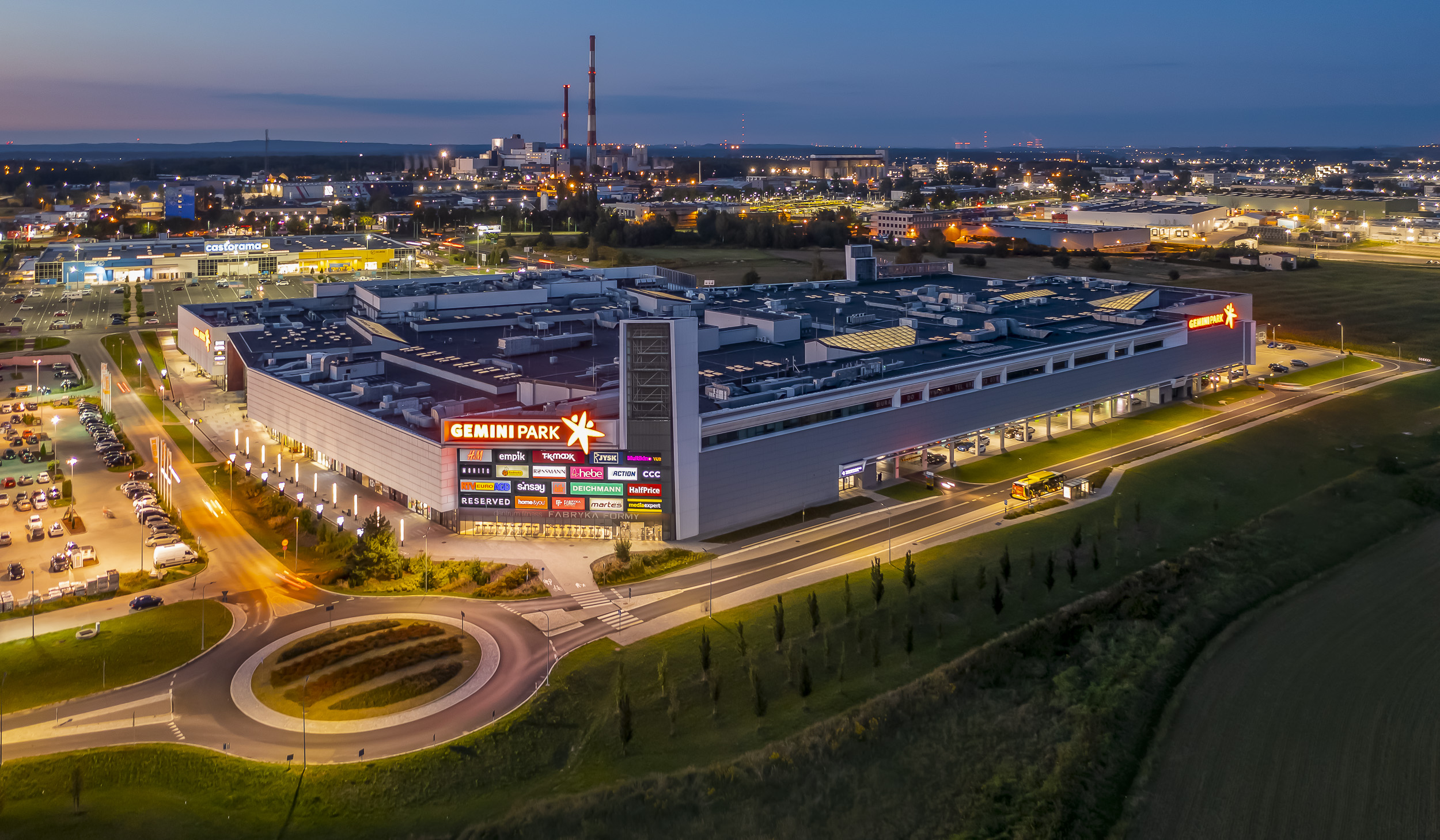
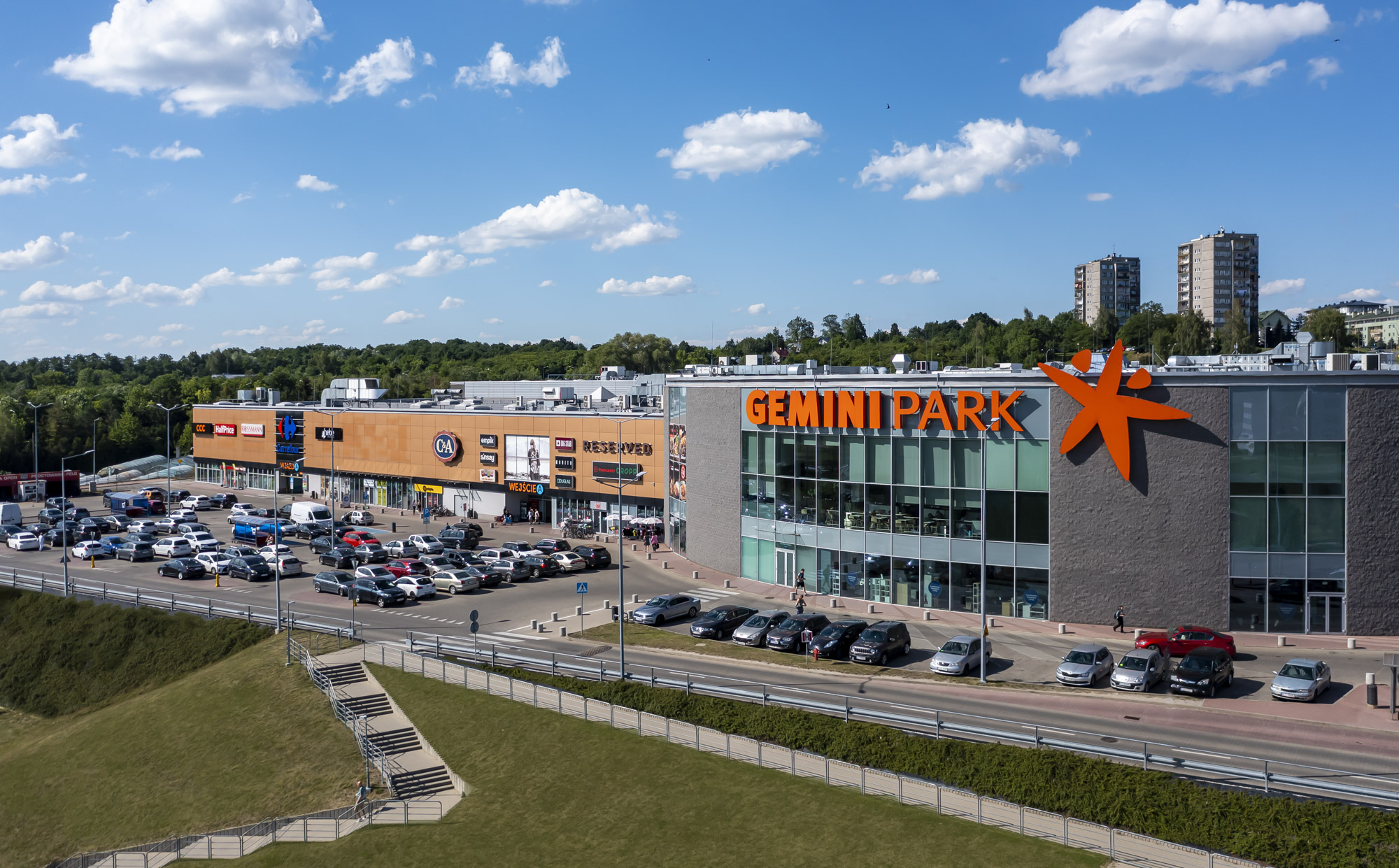
Let’s get specific. I remember a time over a decade ago when Gemini Park Bielsko-Biała was in a difficult position. The center’s image was being questioned. Today, it looks completely different. What journey did you take? Let’s look at your communication with customers and business partners using Gemini Park Bielsko-Biała as an example.
I look back at the history of Gemini Park Bielsko-Biała with a certain sentiment and emotion. Like a first-born, demanding, and problematic child, you love it in a special way and give it the most attention.
Gemini Park Bielsko-Biała faced a tough situation from day one, launching in a highly saturated market. Even back in 2009, when it opened, the retail saturation in the region was nearly 1,000 square meters per 1,000 inhabitants—well above the national average. For context: the city has nearly 200,000 residents and three large shopping galleries, each 40,000–50,000 square meters.
I want to emphasize one thing: there are no one-person successes. Everything achieved at Gemini Park would have been impossible without a fantastic team—across operations, leasing, and customer communication—and exceptional partners.
Where did you start?
First, we analyzed the market structure: what the competition offered and their strengths. Then we focused on ourselves—performing a classic SWOT analysis for Gemini Park and then for our competitors.
This allowed us to define spaces for development that were not the domain of our competition. We also decided to implement extensive sociological and demographic consumer research. We analyzed which customers visited us, what they needed, their profiles, and why certain customers weren’t visiting.
We also scrutinized the catchment area using the Huff Gravity Model. This allowed us to predict the probability of a consumer visiting a location based on distance and attractiveness (gravity), accounting for existing competition. We had to find elements that would set Gemini Park Bielsko-Biała apart.
At first, you simply wanted to know which “weight class” you were competing in.
Defining what we had and where we could go allowed us to build a strategy. We concluded that our location was a key differentiator. We are on the exit route south of Bielsko, which could be seen as a negative, but we turned it into an asset. The proximity to the river and green spaces also held potential.
We summarized our core strengths to build a competitive edge:
- The aforementioned strategic location.
- A strong, recognizable cinema chain.
- Green areas adjacent to the center that could be utilized.
- The foundations of a food court linked to leisure and entertainment.
- Free, comfortable, covered parking—a major asset for a location outside the strict city center.
Based on this, we built our differentiator: a family-oriented center with a comprehensive retail offer but a powerful focus on entertainment and family leisure. We partnered with an operator to create the external “Park W DECHE!” educational-entertainment park. We combined this with the cinema and food court and began communicating this clearly: “Dear customer, come to us—you have comfortable free parking, a wide choice of brands, and an entertainment-restaurant offer you can truly enjoy.”
We also tapped into Bielsko’s tourism potential. We decided to expand our sports offer, which gave us a significant advantage. Five to eight years ago, we began implementing these elements. By building an emotional and personalized context through entertainment and sports, we strengthened the perception of the entire center. The result? 98–99% occupancy and high footfall.
So, you had the right cards in your hand all along; you just had to learn how to play them.
Yes, but it wasn’t enough to just say “we have a park for kids.” Rebranding a center is a process requiring consistent narrative building through social and local initiatives. A shopping center does not exist in a vacuum; it needs an identity rooted in the local community.
It’s about the emotional dimension. We regularly reach for socially and locally important themes. For example, collaborating with the local football club TS Podbeskidzie for the “Give Blood, Go to the Match” campaign—one of the largest blood donation drives in the region.
We also partner with NGOs, local government, and universities. One of our most important projects is Science Point—Poland’s first free mini-science center in a mall, created with the University of Bielsko-Biała. Three editions have attracted nearly 100,000 visitors. We also host the annual NGO Picnic, bringing together nearly 40 local associations.
I have always compared a shopping center to the ancient Agora: a place of trade, but also a place for meetings, discussions, and topics that matter politically, economically, and socially. In my view, a shopping center can and should take on the role of the Agora.
Lately, shopping centers are often compared to retail parks. The latter are great for “quick-stop” shopping. A shopping center, however, can serve as a social hub.
Remember, the market share of shopping centers is 76%, while retail parks hold 22%. These are completely different products meeting different needs. I am not worried about the future of well-managed, well-profiled retail assets.
To conclude, every shopping center is an investment product. But investment success—100% occupancy at expected rental rates—is only achieved if the consumer accepts the center. If the B2C customer doesn’t “befriend” the place, business success won’t follow. It is a system of connected vessels. Without the context of an emotional visit and building a unique identity, a shopping center will not be accepted by the modern consumer.
The interview was conducted by Radosław Rybiński from Retailnet.